
Home / Hairstyles / Men's Hairstyles
Men's cuts have their own vocabulary — fade heights, taper lengths, guard numbers — that can be confusing if you're not already familiar with barbering terms. Getting a consistent result from visit to visit, especially across different barbers, usually comes down to being specific about that vocabulary rather than relying on vague descriptions like "not too short."
Popular Cuts
- Crew cut: short and uniform on top with tapered sides, a low-maintenance classic.
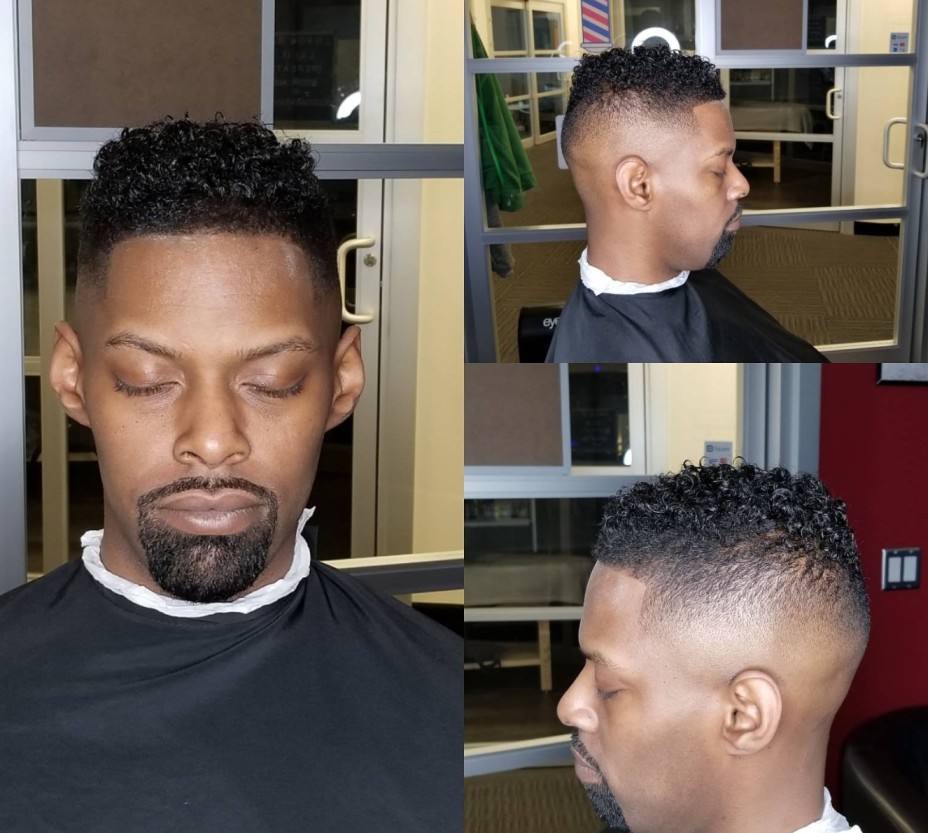
- Fade: hair gradually shortens from longer on top to skin at the neckline, available in low, mid, or high variations depending on where the fade starts.
- Textured quiff: longer on top and styled upward and back, with shorter, often faded sides.
- Classic side part: a defined part with combed, polished styling — a more traditional, formal look.
- Curly top / twist-out styles: shorter, faded sides with natural curl or texture left longer on top, popular for textured and coily hair.
Understanding Fade Heights
"Low," "mid," and "high" fades refer to where on the head the gradual shortening begins. A low fade starts just above the ear, a mid fade starts around temple height, and a high fade starts higher up the side of the head, leaving a more dramatic contrast between the short sides and longer top. None is objectively "better" — the right choice depends on your hair type, face shape, and how bold a contrast you want.
Talking to Your Barber
Bring a reference photo, and describe fade height in clock-position or finger-width terms — for example, "fade starting about two finger-widths above the ear" — for the most consistent results between visits. It also helps to mention your hair's growth pattern (a cowlick, a widow's peak) if you know it affects how certain styles sit, since your barber may adjust the cut to work with it rather than against it.
Matching a Cut to Hair Type
Straight hair holds sharp, defined lines well, which is part of why fades and crew cuts look especially crisp on straighter textures. Wavy and curly hair can carry the same cuts, but often needs a slightly different approach to the top length and product to avoid looking triangular or overly voluminous — ask your barber whether they'd recommend leaving a bit more length on top to let the natural texture settle properly.
How Often to Get a Cut
Fades in particular need frequent maintenance — most men with a fade get a touch-up every 2–3 weeks to keep the line sharp, since the shaved or very short sections grow out visibly fast. Longer, less structured cuts can usually stretch to 6 weeks or more between visits.
Special Occasion Styling
Short men's cuts still offer styling range for events — a bit of extra product and a comb can dress up a fade or textured top for a wedding, interview, or photo, without needing a different haircut altogether. Ask your barber to show you a couple of variations on your standard cut during your next visit, so you have a "dressed up" version ready without having to figure it out yourself the morning of.
Facial Hair and Haircuts Work Together
A haircut and beard or facial hair styling are often planned together, since the two visually balance each other — a tighter fade can pair with a fuller beard, while a longer style on top often looks more proportional with lighter facial hair. If you're growing out or changing your facial hair, mention it to your barber, since it may change their haircut recommendation entirely.
See also: Haircuts: A Practical Guide.
Finding a Barber You Trust
Consistency matters more than any single great haircut — once you find a barber who reliably delivers the cut you want, sticking with them tends to produce better long-term results than switching around from visit to visit.