
Home / Hair Services / Haircuts
Of everything you can ask for at a salon, the haircut is the most personal — it's the one service that changes how you look every single day until your next appointment. That makes it worth understanding before you sit in the chair, whether you're seeing a stylist for the first time or trying to explain a change to someone new. This guide walks through the main families of haircuts, how face shape and hair type influence what actually works, and how to keep a cut looking sharp between visits.
Common Types of Haircuts
Haircuts generally fall into a few broad families: blunt cuts with a single, even length; layered cuts that remove weight and add movement; and textured or shag-style cuts built around choppy, irregular layers. Within each family, length and styling choices create endless variation. A blunt cut can be worn chin-length or waist-length; a layered cut can be subtle, with just a few face-framing pieces, or dramatic, with heavy layering throughout. Most stylists start a consultation by narrowing down which of these three families you're drawn to before talking specifics.
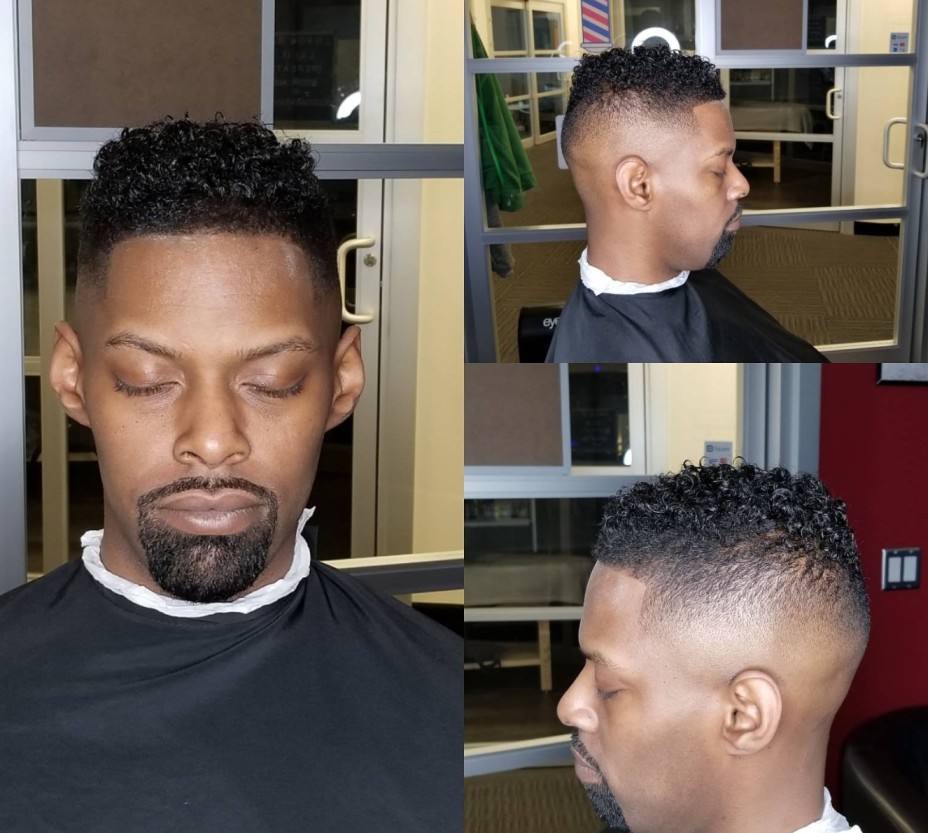
For shorter styles, the same logic applies at a smaller scale. A crop, a bob, or a pixie can each be cut blunt for a graphic, sharp line, or layered for softness and volume. Barbering-style cuts add another dimension — fades and tapers that graduate length gradually from the neckline up, which is its own skill separate from scissor cutting and usually calls for a barber or a stylist who specifically works with clippers.
Choosing a Haircut for Your Face Shape
As a general rule, cuts with volume near the jaw tend to soften angular faces, while cuts that add height at the crown can balance a rounder face. Longer, face-framing layers can draw the eye downward and lengthen a shorter or wider face, while blunt, chin-length shapes tend to widen the lower half of the face — useful if you want to soften a very narrow jawline, less useful if your face is already round. These are starting points, not rules — bring reference photos to your consultation so your stylist can adapt them to your specific features rather than a generic chart.
It also helps to think about proportion beyond just the face itself. Bangs, parting, and length all interact with your forehead height, brow shape and even glasses frames. A style that reads as flattering in a photo of someone else may sit completely differently on you once those variables change — which is exactly why an in-person consultation, not just a picture, gets the best result.
Choosing a Haircut for Your Hair Type
Fine, straight hair often benefits from blunt lines that create the appearance of thickness, since too many thin layers can make already-fine hair look even sparser at the ends. Thick, straight hair usually has the opposite problem — it can look heavy or triangular without enough layering to remove bulk and let it move.
Curly or coily hair usually looks best cut dry, with layers shaped to work with the hair's natural curl pattern rather than against it, since curls shrink upward significantly once they dry and a cut done wet can end up much shorter — or much less balanced — than expected. If you have curly hair, it's worth specifically asking whether your stylist regularly cuts curls dry; it's a different technique from a standard wet cut, and experience matters.
How Often to Get a Trim
Most people do well with a trim every 6–8 weeks to maintain shape and manage split ends, though hair that's growing out or being kept very short — like a fade or a cropped pixie — may need trims every 3–4 weeks to hold its line. Longer styles that are simply growing out with minimal shape can often stretch to 10–12 weeks between visits. If you're not sure where you fall, ask your stylist to recommend a schedule based on how quickly your particular cut loses its shape, since that varies more by style than by hair type alone.
Getting the Most Out of a Consultation
A good consultation is a conversation, not a monologue — the more specific you can be about what you liked and didn't like about past cuts, how much time you spend styling day to day, and what you actually want to maintain at home, the easier it is for a stylist to translate a reference photo into something that will genuinely work for your hair and your routine.
See also: Hairstyles by Face Shape, Hair Length Calculator, Salon Cost Calculator.