
Home / Hair Services / Hair Coloring
Hair color is one of the most requested — and most misunderstood — services at any salon. Terms like "balayage," "ombré," and "highlights" get used loosely online, which makes it hard to know what you're actually asking for when you book. This guide breaks down the main techniques in plain language, so you can walk into a consultation with a clearer idea of what you want and how to keep it looking good once you leave the chair.
Single-Process Color
Single-process color applies one shade evenly from root to end in a single application — the most straightforward way to cover gray or shift your overall color. It's called "single-process" because, unlike lightening techniques, it doesn't require a separate step to lift your natural pigment first; the color itself does the work in one application. This makes it typically the fastest and most affordable coloring service, and the most common choice for people who want consistent gray coverage on a regular schedule.
Highlights
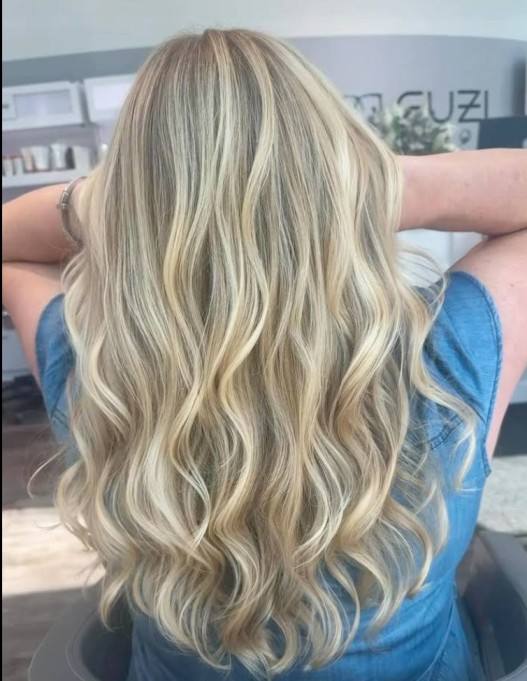
Highlights lighten individual sections of hair, usually with foils, to add dimension and brightness without changing the overall base color. Foil placement can be subtle — thin, face-framing pieces — or dense, covering most of the head for a noticeably lighter overall look. Because the lightener is isolated to foiled sections, highlights tend to grow out with a clearer line of demarcation than techniques that blend more freely, which is one reason they're often paired with a toner to keep everything cohesive.
Balayage
Balayage is a hand-painted, freehand technique — the word itself is French for "to sweep" — that creates a softer, lower-maintenance graduation from darker roots to lighter ends compared to traditional foil highlights. Because the lightener is painted on by hand rather than isolated in foils, the result tends to grow out much more gradually and naturally, which is why balayage has become popular with people who don't want to be back in the chair every four to six weeks for a root touch-up.
Ombré
Ombré describes a more deliberate, higher-contrast transition from a darker top to noticeably lighter ends, rather than the soft blend typical of balayage. Where balayage aims for a graduated, almost sun-kissed effect, ombré is meant to be more visually distinct — a clearer line between the two tones, often used to make a bold statement rather than to look like natural, gradual lightening.
How Long Color Actually Takes
A single-process color or a simple set of highlights can often be finished in under two hours. Balayage and full-head foiling take longer — typically two to four hours — because of the additional application, processing, and toning steps involved. Significant color corrections, or a major change from dark to very light, often can't safely be done in a single visit at all; a responsible stylist will tell you upfront if your goal realistically needs two or more sessions spaced weeks apart to protect your hair's condition.
Color Maintenance
Color-treated hair generally benefits from sulfate-free shampoo, cooler water temperatures, and UV protection when you're outdoors for extended periods, since heat and sun exposure both accelerate fading. Periodic gloss or toner refreshes between full color appointments help keep tone from turning brassy, particularly on lightened blondes, which are the most prone to picking up warm, yellow tones as the toner fades.
Questions to Ask Your Stylist
- How many sessions will this realistically take, especially for a big change?
- What upkeep schedule do you recommend for this technique?
- What products should I use at home to protect the color?
- How will this affect the condition of my hair, and what can we do to minimize damage?
See also: Caring for Colored Hair, Salon Cost Calculator.